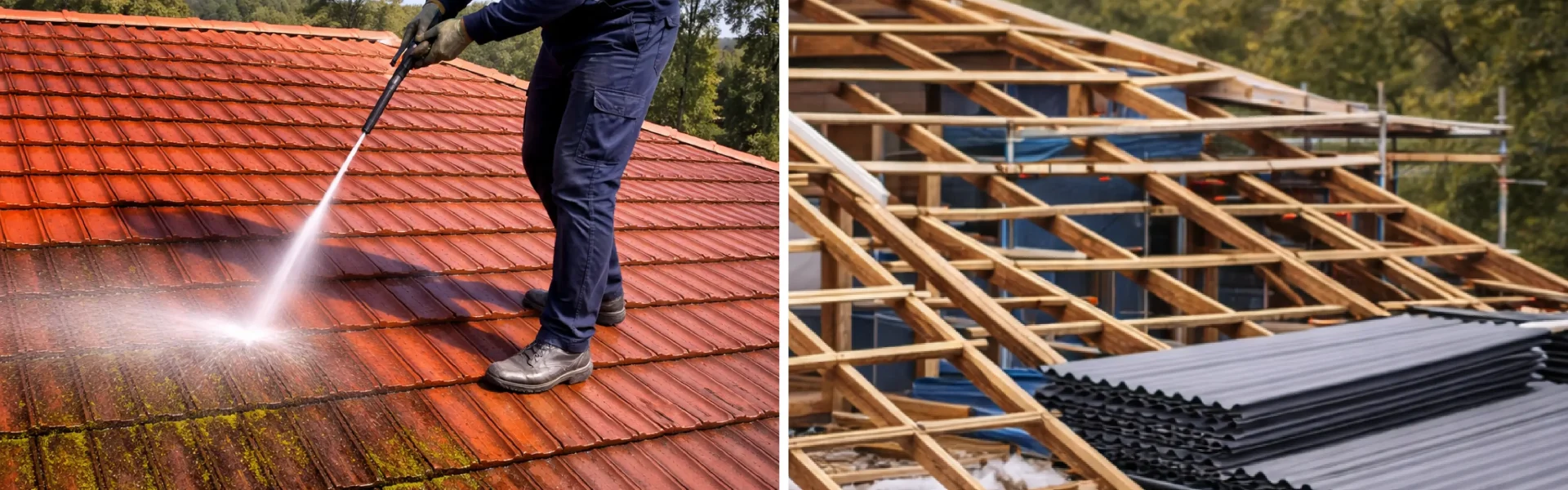

A roof guards framing, insulation, wiring, and indoor air quality. Over the years, heat, salt spray, and winds wear down coatings and loosen flashings. Many homes do not need a full tear-off to restore watertight function. Restoration concentrates on failure points and renews protective layers. Replacement removes every component, including areas that are still sound. For many households, the better choice is the one that keeps serviceable materials in place while correcting defects early.
What “Restoration” Covers
Restoration usually involves a close inspection, minor repairs, pressure cleaning, ridge work, sealing, and then a new coating system. In Frankston, coastal moisture can speed surface breakdown, so timing matters. Guidance like Roof Restoration in Frankston fits this approach, keeping attention on stabilising tiles, stopping water entry at penetrations, and renewing finishes without stripping the whole covering.
Cost Efficiency Without False Savings
Replacement costs often include disposal, new underlay, new battens, extended labour, plus longer hire time for access gear. Restoration limits spending by keeping the working structure in place. Savings usually come from fewer materials and shorter site time. Budget planning also improves because repairs can be staged. Money kept back can support gutters, ventilation, or insulation work, strengthening the home’s overall moisture and temperature control.
Less Disruption for Households
A full tear-off brings noise, dust, and access limits for days. Weather delays can also leave sections exposed longer than planned. Restoration is usually faster and more contained. Cleaning and coating are loud, yet most of the roof stays intact. Less downtime helps families, pets, and home-based work. A calmer site also lowers the chance of accidental damage to gardens, driveways, skylights, or solar cabling.
Faster Weatherproofing
Water ingress rarely waits for a convenient booking. Restoration can tackle failed flashings, cracked tiles, and split sealant quickly. Crews can isolate a problem area, then complete repairs in a controlled sequence. Larger replacement jobs may take longer to start because of bigger material orders and more complex access needs. A quicker return to a sealed surface reduces the risk of mould growth, plaster damage, and persistent musty odour indoors.
Better Use of Existing Materials
Many tiles or sheets remain structurally sound even when the surface looks tired. Restoration preserves that value by keeping what still performs. It also avoids disturbing fixings that have held steady for decades. Where components are beyond use, selective swaps handle them without discarding everything. This matters for older homes with matching tile profiles that are difficult to source, where full replacement can force a change in appearance.
Environmental Impact: Waste and Transport
Replacement can generate large waste volumes of tiles, metal sheets, sarking, and fasteners. Disposal and transport add emissions and landfill pressure. Restoration produces far less debris because only damaged sections come off. Fewer deliveries are needed, since coatings and small batches of parts replace full pallet loads. For communities trying to reduce construction waste, extending roof life is often the lower-impact option with the same weatherproof goal.
Performance Gains From Surface Renewal
A restored surface improves water shedding and reduces seepage through porous areas. Fresh coatings help slow oxidation on metal and reduce moisture absorption in older tiles. Colour choice matters too, because lighter finishes can reflect more solar heat than a weathered, darkened top layer. Better sealing around ridges, valleys, and penetrations also limits wind-driven rain entry during squalls, helping ceilings and insulation stay dry.
Where Replacement Still Makes Sense
Some roofs are too compromised for restoration to be a sensible use of funds. Widespread sagging, repeated timber decay, or corrosion that has eaten through sheets can justify a full rebuild. Major design faults, such as an incorrect pitch for the profile, may also require a reset. A careful inspection should review battens, valleys, and flashings as well as signs of long-term moisture movement before choosing any path.
How to Decide: A Simple Assessment Path
Good decisions come from evidence rather than assumptions. A written condition report should list cracked units, loose ridge caps, degraded sealant, rust hotspots, and gutter overflow points. Photos help track changes over time. The quote should separate essential fixes from cosmetic ones. work, so priorities stay clear. If most areas test sound and the leak points are localised, restoration usually offers the best balance of cost, time, and protection.
Conclusion
Restoration can deliver what many households need: a sealed, durable, cleaner-looking roof, without the cost and upheaval of a full rebuild. It preserves serviceable materials, reduces waste, and restores weather protection sooner. Replacement still has a clear place where structure has failed, yet many roofs simply need targeted corrections and a renewed coating system. With a thorough inspection and a staged scope, households can extend roof life with confidence and control.