
The durability and aesthetic appeal of mechanically polished concrete have made it an increasingly popular floor choice across many industries and residential spaces. This floor solution offers a shiny, reflective surface that is easy to maintain. Its combination of elegance and functionality has made mechanical polishing of concrete a popular method in recent times, fit for use across commercial spaces, schools, and homes. Learning about the process of creating this shiny surface shows the manufacturer’s preparation, skill, and accuracy. Above all, though, it helps people choose the right flooring solution for their spaces.
Surface Preparation
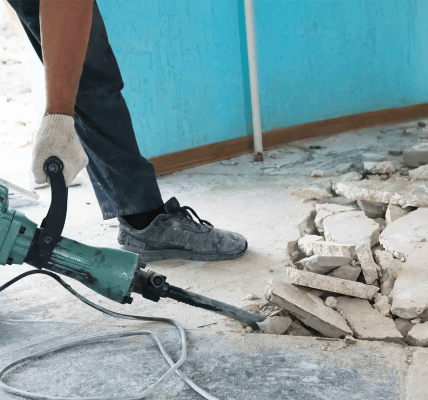
The process starts by preparing the concrete surface for a strong foundation for polishing. Before proceeding, make sure to strip all old adhesives, paints, or debris from the surface. Specialising equipment rubs out imperfections, smoothing the slab and exposing a new layer. With mechanically polished concrete, it is possible to easily detect cracks or defects, which are then repaired to deliver a consistent and durable final product.
Initial Grinding
Following surface preparation, heavy-duty grinders with coarse diamond segments are employed to grind the material into shape. These machines eliminate surface defects and reveal the aggregate below. This initial grinding levels the floor, preparing it to receive a finer abrasive. This is often done in several passes to ensure an even, flat surface over the entire area.
Repairing Imperfections
After the first grinding, workers examine the slab to check for holes, chips, or cracks. A proper patching compound is used to fill any imperfections and adhere closely to the concrete. This fixes all future hiccups, guaranteeing an uninterrupted finish. Fixing imperfections will keep the surface strong and looking good for a long time.
Densifying the Surface
One of the most important processes of this polishing process is densification. Once the ground concrete is coated with a liquid densifier, it penetrates the concrete, and a chemical reaction occurs. It penetrates the pores and bonds to the slab, thereby making it stronger, harder, and more resistant to stains and wear. The more compact the surface is, the more you can polish it to make it glossy and reflective.
Progressive Polishing
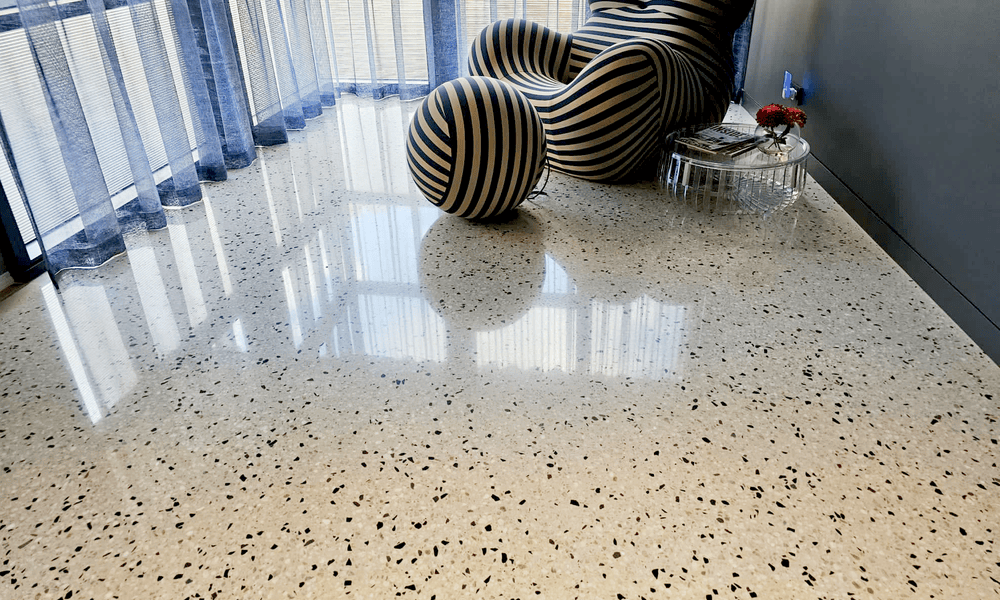
Once the densification step is completed, the polishing continues with diamond abrasives in finer and finer grits. Gradually, each pass employs a higher grit that creates a smoother surface and a higher reflectivity. The overlay is done with a very specific process that leaves a glass-like covering, which is both scratch- and mark-resistant. The shine required determines the number of polishing rounds undertaken, from matte to high-gloss.
Edge Polishing
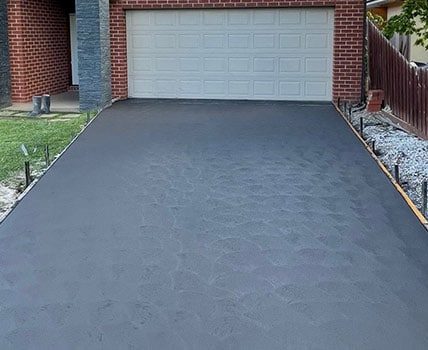
Big machines handle the major sections of different spaces (for example, your driveway), and hand-held tools are used for the edges and corners. For the floor to look cohesive, these details must be carefully considered and handled. Edges are refined with smaller pads, and the same steps of abrasives are used on the tile face. This ensures that every section is consistent in finish, and nothing too rough is left behind.
Final Cleaning
After polishing, the surface is cleaned to eliminate any dust or residue. This cleaning makes sure that the shine from polishing is free from haziness. Thorough cleaning also paves the way for optional protective applications like sealers or stain guards.
Optional Sealing
While polished concrete is durable, some people need a little more safety and protection. A sealer can be applied to provide even more protection against spills and wear. Modern sealers sink into the surface without building a visible top coat, maintaining the natural appearance while adding a layer of protection against damage. The decision to apply a sealer depends on what the space will be used for and the preferences of the owner.
Routine Maintenance
Keeping the shine intact requires some routine maintenance. The floor can last long and continue to look good with the following few steps taken to preserve the shine:
- Sweep and wet mop regularly to get rid of grit and avoid scratching
- To keep the shine and pristine look of the surface, refrain from using strong chemicals
When taken care of, mechanically polished concrete stays beautiful and effective for decades.
Conclusion
For areas where both durability and beauty are a must, mechanically polished concrete combines delicacy and strength. Each stage, from the preparation to the final polish, results in a rock-solid, shimmering finish. Through a sequence of planned actions, workers give floors a shine that can endure the rigours of active surroundings while offering modern aesthetics.